

Can You Paint Acrylic Over Oil Paint...I say YES!

As artists, we all know, "oil over acrylic, never acrylic over oil." While that's really good advice, I've found ways to successfully use acrylic paint on top of fully dried oil paintings as part of my mixed media process. Let me share why I do it, what I've learned, and how you can experiment with it yourself.
Why I Started Painting Acrylic Over Oil
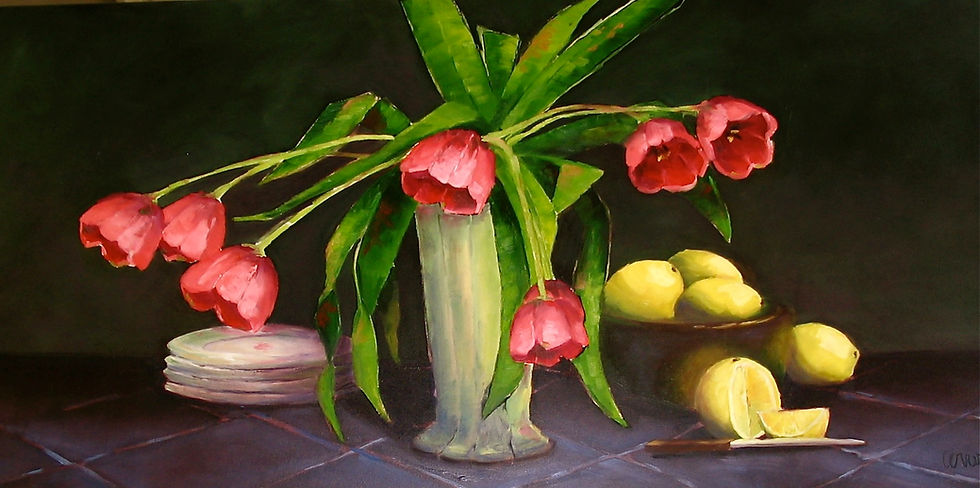
One may wonder why the heck I would do such a thing... especially to a painting (above) that I loved so much! In life, as we get older, we realize that change is good! Mix it up, keep it interesting, and move along. I loved both versions of this painting, and it still has a prominent place in my home. It's a reminder to keep changing things up.
AND...here are a few more reasons to change things up in your painting...
The creative challenge of breaking traditional rules
Adding texture, marks, and details that are easier with acrylics
Creating layered mixed media effects
Giving older paintings a fresh direction

Dry Time Matters!
Dry time is really important! If you're painting over an oil painting, make sure the oil paint is thoroughly dry... and this can actually take from a few days, weeks, to a few years depending on some of the conditions listed below. I typically paint over my own art, which I know is dry since I haven't painted in oil in close to 10 years! Though I also will paint over art I pick up in a thrift store! I look for pieces with a color palette or theme I would enjoy working with, and after preparing the surface properly (described in my YouTube video below)... I start my mixed media creating over it.
Conditions that affect dry time...
Paint Thickness: Thicker layers take longer to dry as the outer layer forms a skin while the inner layers remain wet.
Type of Oil Used: Different oils (like linseed or walnut) have varying drying rates.
Environmental Conditions: Temperature, humidity, and air circulation can significantly influence drying times. Warmer, drier conditions typically speed up the process.
Pigment Type: Some pigments, especially earthy tones, dry faster than others. For instance, raw umber can dry within a day if applied thinly.
Original still life oil painting to acrylic abstract over top
My Process
Assess the Surface
Check that the oil painting is completely dry
Look for glossy areas or thick paint buildup; it may suggest it's still not dry and thick textures you'll need to work with.
Prepare the Painting
• Surface preparation techniques, I share how I do it in the video below
Add Acrylic Layers
Building transparent and opaque layers as I would with any of my mixed media paintings
Mark-making, stencils, collage, papers, and texture
Continue the Conversation
Responding to what the original painting suggests, it's a great starting point/inspiration
Working intuitively between materials

Watch the Process
In my YouTube video below, I share how I prepare one of my very first oil paintings (from when i was a teenager...many, many years ago) to get it ready to create a mixed Media piece over it. Click the big red button and go there!

What's Next?
In future videos, I'll show exactly how I apply acrylic paint over this dried oil painting and share some of the decisions I make along the way. Subscribe to my emails and my YouTube channel to keep up to date with what I have going on in the studio. A few things to look forward to...
What Works Well
Highlights and graphic elements
Collage additions
Texture and pattern
Mixed media embellishments
Experimental surface treatments
Things to Keep in Mind
Not a traditional archival approach
Results may vary depending on materials
Always test on sample surfaces first
Consider your goals: fine art conservation vs. creative exploration

Final Thoughts
Art evolves through experimentation. We all know, painting acrylic over oil isn't the conventional path, though it has opened up creative possibilities in my own work. If you're curious about pushing boundaries and exploring mixed media techniques, it may be worth trying on a fully dried painting and seeing where it takes you.
Have you experimented with acrylic over oil? I'd love to hear about your experience in the comments.
Experimentation keeps new ideas rising to the surface!


Comments